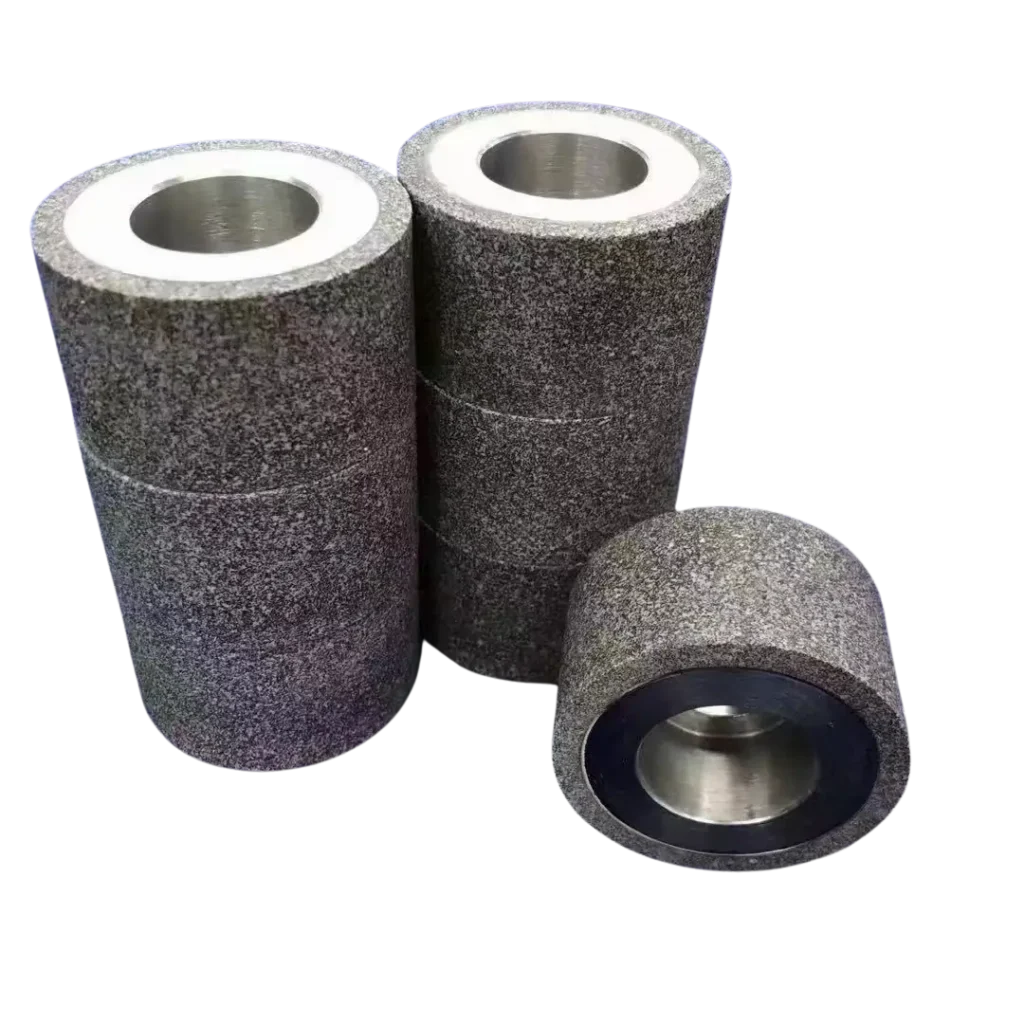
Choosing and using ceramic CBN grinding wheels correctly can be the difference between excellent results and wasted investment. This guide walks you through everything you need to know – from machine compatibility to dressing procedures.
Let’s get started.
Step 1: Check Your Machine Compatibility
Before buying ceramic CBN wheels, verify that your grinder can handle them.
Why this matters: Ceramic CBN is a superabrasive. If your machine is too slow, you will not get the performance you’re paying for.
The requirement: Minimum line speed of 25 m/s
How to calculate required spindle speed:
| Wheel Diameter | Minimum RPM Required |
|---|---|
| 10 mm | 47,770 RPM |
| 15 mm | 31,850 RPM |
| 20 mm | 23,885 RPM |
| 25 mm | 19,108 RPM |
| 30 mm | 15,923 RPM |
Formula: RPM = (25 m/s × 60,000) ÷ (π × Diameter in mm)
Action item: Check your grinder’s specifications before purchasing.
Step 2: Select the Right Abrasive Concentration
Concentration affects efficiency, surface quality, and wheel life. Most people overlook this parameter – don’t be one of them.
The simple rule:
| Application | Concentration | Why |
|---|---|---|
| Rough grinding | Higher | More grains = higher material removal |
| Finish grinding | Lower | Fewer grains = less surface scratching |
General guidelines by bond type:
| Bond Type | Concentration Range |
|---|---|
| Resin bond | 70–100% |
| Ceramic bond | 100–200% |
| Sintered/metal bond | 75–150% |
Key takeaway: Concentration is not “higher is better.” Match it to your specific process.
Step 3: Choose the Correct Feed Rate by Grit Size
Feed rate directly impacts both efficiency and surface quality.
Recommended baseline feed rates:
| Grit Size | Feed Rate (mm/pass) |
|---|---|
| 100–150# | 0.055 mm |
| 170–240# | 0.035 mm |
| 240# and finer | 0.015 mm |
Adjustment factors:
-
Machine rigidity
-
Spindle speed
-
Workpiece material hardness
-
Coolant effectiveness
Action item: Start with the baseline, then fine-tune based on actual results.
Step 4: Install and Mount the Wheel Correctly
Proper mounting ensures safety and performance.
Quick checklist:
-
Inspect wheel for damage before mounting
-
Clean the spindle and flanges
-
Use proper balancing if required
-
Tighten to manufacturer’s torque specifications
-
Run wheel at operating speed for 1 minute before grinding (with safety guard in place)
Step 5: Set Up Dressing Parameters
Dressing is critical for maintaining wheel performance. Two methods are commonly used.
Method 1: Diamond Dresser (Single-point)
Example setup:
-
Wheel thickness: 50 mm
-
Grit size: #80 (grain diameter ≈ 0.18 mm)
-
Wheel speed: 1,614 RPM
Calculated traverse speed:
| Parameter | Value |
|---|---|
| Upper limit | 290 mm/min |
| Lower limit | 145 mm/min |
| Recommended range | 145–290 mm/min |
Calculated traverse time per pass:
| Parameter | Value |
|---|---|
| Fastest | ~10.3 seconds |
| Slowest | ~20.7 seconds |
| Recommended range | 10.3–20.7 seconds |
Method 2: Diamond Roller Dresser
Critical rule – never break this:
⚠️ Never set the speed ratio to 1 or near 1
What is speed ratio?
Speed Ratio = (Diamond dressing roller line speed) ÷ (grinding Wheel line speed)
Recommended starting parameters:
| Grinding Stage | Direction | Speed Ratio |
|---|---|---|
| Finish grinding (high surface finish required) | Counter-direction | ~0.81 |
| Rough grinding / high stock removal | Same-direction | ~0.40 |
Step 6: Know When to Dress
Dress the wheel when you notice any of these signs:
| Sign | What It Means |
|---|---|
| Vibration | Wheel is out of balance or loaded |
| Slipping | Wheel is glazed or dull |
| Burning | Wheel is dull or coolant is insufficient |
| Poor surface finish | Wheel needs sharpening |
| Increased spindle load | Wheel is dull |
Pro tip: For high surface finish requirements, dress at slower speeds. For roughing, faster passes are acceptable.
Step 7: Optimize for Your Workpiece Material
Different materials require different approaches.
For Hardened Steel (SKD11, 42CrMo, Bearing Steel)
| Parameter | Recommendation |
|---|---|
| Wheel type | Standard ceramic CBN |
| Concentration | 100–200% |
| Feed rate | As per grit size table |
| Expected dressing interval | 80–200 parts |
For Titanium Alloy
| Parameter | Recommendation |
|---|---|
| Wheel type | High-porosity ceramic CBN |
| Line speed | 45 m/s |
| Coolant | Grinding fluid flushing (required) |
| Expected surface finish | Ra 0.4μm |
For High-Speed Steel (HSS)
| Parameter | Recommendation |
|---|---|
| Wheel type | Standard ceramic CBN |
| Concentration | 150–200% |
| Feed rate | Slightly lower than baseline |
| Special note | Excellent results due to CBN’s affinity for HSS |
Step 8: Monitor Performance and Adjust
Track these metrics to ensure optimal performance:
Key performance indicators:
| Metric | Target |
|---|---|
| Dressing interval | 80–200 parts (depending on application) |
| Bore tolerance | ±0.002mm |
| Surface finish | ≤ Ra 0.1μm |
| Wheel life | 10–20x longer than alumina |
When results fall short:
| Problem | Likely Cause | Solution |
|---|---|---|
| Poor surface finish | Concentration too high or feed rate too high | Lower concentration or reduce feed rate |
| Short dressing interval | Concentration too low or wheel too soft | Increase concentration or use harder grade |
| Burning | Feed rate too high or insufficient coolant | Reduce feed rate or improve cooling |
| Vibration | Wheel imbalance or incorrect mounting | Rebalance or remount |
Quick Reference Summary Table
| Step | Key Action | Critical Parameter |
|---|---|---|
| 1 | Check machine compatibility | Minimum 25 m/s line speed |
| 2 | Select concentration | Rough: higher, Finish: lower (100–200%) |
| 3 | Choose feed rate | 0.055 / 0.035 / 0.015 mm/pass by grit |
| 4 | Mount wheel correctly | Clean, balance, torque properly |
| 5 | Set dressing parameters | Speed ratio never = 1 |
| 6 | Know when to dress | Vibration, slipping, or burning |
| 7 | Optimize for material | Titanium needs high porosity + 45 m/s |
| 8 | Monitor and adjust | Track dressing interval and surface finish |
Final Checklist Before You Start
-
Grinder speed ≥ 25 m/s verified
-
Correct concentration selected for your application
-
Feed rate matched to grit size
-
Dressing method and parameters established
-
Coolant system working properly
-
Safety guards in place
-
Test run completed on sample workpiece
Need Help?
We have served over 1,000 enterprises and can help you get the right ceramic CBN grinding wheel for your specific application.
Contact us – we’ll recommend the right wheel, dressing parameters, and feed rates for your grinder and workpiece.