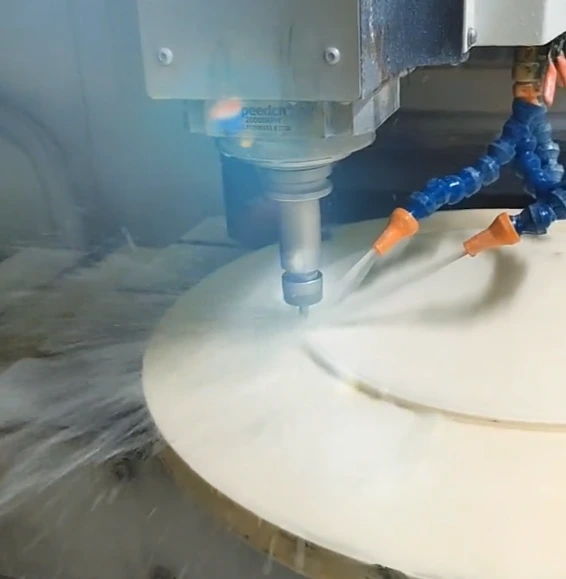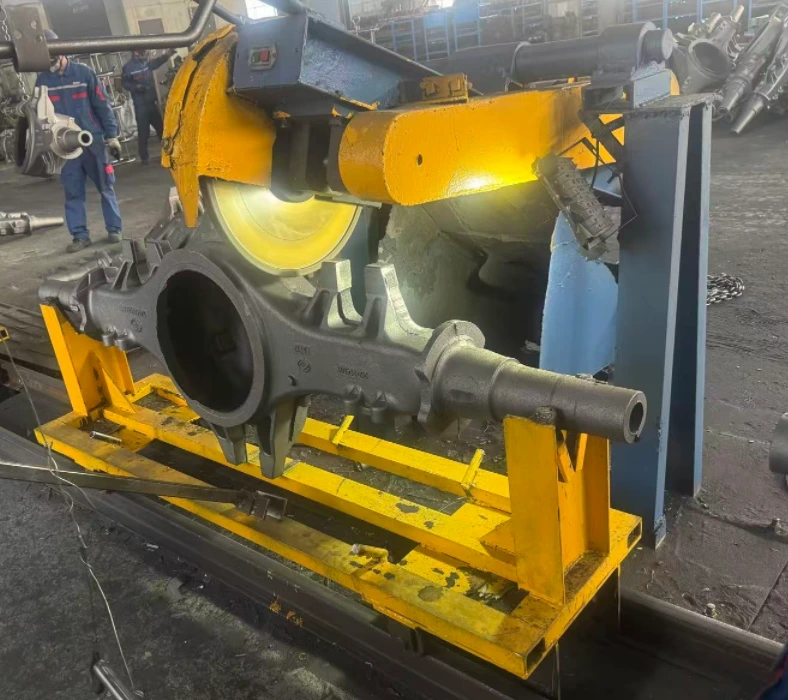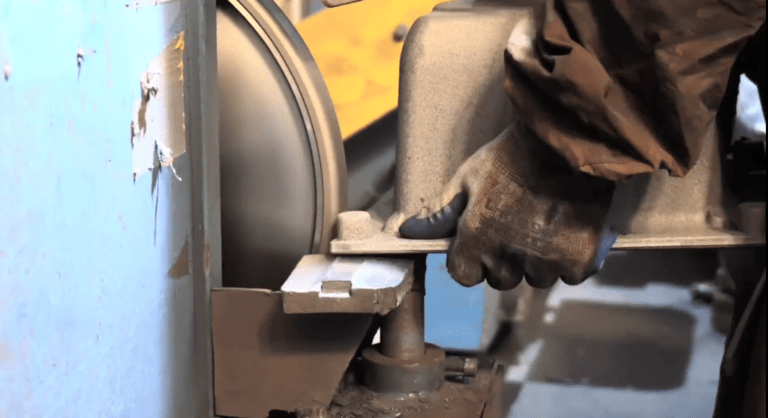
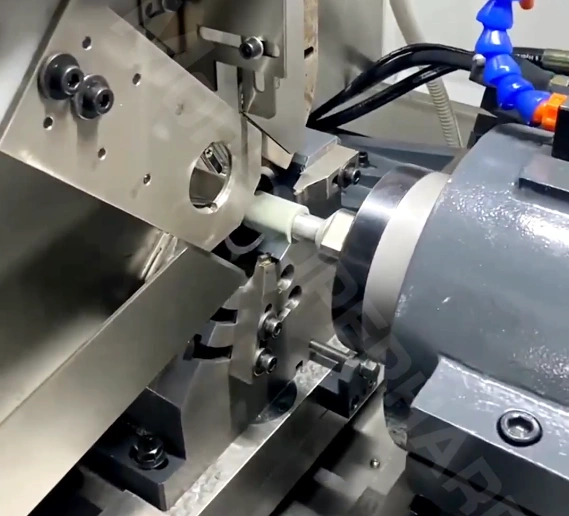
Vitrified CBN grinding heads are specifically designed for precision internal hole (ID) grinding of steel workpieces. They excel at machining hardened steels, high-speed steels, and other ferrous alloys.
During grinding, the CBN abrasive exhibits excellent self-sharpening properties, maintaining cutting sharpness without frequent dressing. This enables:
-
Dimensional stability within ±0.002mm
-
Surface finish down to Ra 0.1μm or lower
Compared to conventional alumina wheels, vitrified CBN wheels offer 10–20x longer tool life and 3–5x higher grinding efficiency, making them ideal for high-volume precision applications such as bearing bores and gear internal holes.
Key Advantages of Vitrified CBN Grinding Wheels
1. High Rigidity & Low Thermal Expansion
Ceramic bonds have a low thermal expansion coefficient and high rigidity, resulting in minimal tool deflection during grinding. This makes them particularly suitable for high-precision, low-roughness applications where workpiece quality is critical.
2. Excellent Form Retention
Ceramic CBN wheels maintain their shape exceptionally well, with minimal deformation over long production runs. This ensures consistent dimensional accuracy across thousands of parts.
3. Superior Self-Sharpening & Easy Dressing
The ceramic bond is relatively brittle, causing dull grains to fracture and expose fresh, sharp CBN particles. This self-sharpening action extends dressing intervals and reduces downtime. Dressing is fast and simple—both truing and sharpening can be completed in a single operation.
Real-World Application Cases (1,000+ Customers Served)
We have provided grinding solutions to over 1,000 enterprises. Below are representative case studies demonstrating the performance of ceramic CBN wheels.
Case 1: Bearing Manufacturing – Eliminating Vibration Marks
-
Problem: A compressor bearing manufacturer experienced vibration marks on bearing surfaces and could not achieve Ra 0.6μm.
-
Solution: Switched to our ceramic CBN wheels.
-
Result: Vibration marks eliminated, surface finish improved to Ra 0.3μm. Dressing frequency reduced from once per workpiece to once every 200 workpieces.
Case 2: SKD11 Hardened Steel
-
Material: SKD11 hardened steel
-
Solution: Custom ceramic CBN wheel
-
Result: Continuous grinding of 150 parts between dressings, with roundness and cylindricity within 3μm, meeting customer specifications.
Case 3: Hardened 42CrMo
-
Material: Hardened 42CrMo
-
Solution: Ceramic CBN wheel with added pore-forming agents, creating larger chip evacuation spaces and improved heat dissipation.
-
Result: High grinding force, excellent form retention, high precision, and no surface burns due to superior chip evacuation and cooling.
Case 4: Aerospace Titanium Alloy
-
Challenge: Titanium alloy’s high adhesion tendency causes “loading” of conventional wheels, reducing efficiency and surface quality.
-
Solution: Ceramic CBN wheel with a high-porosity formulation, operated at 45 m/s line speed with grinding fluid flushing.
-
Result: Stable, efficient grinding achieving surface finish of Ra 0.4μm.
Case 5: Bearing Raceway Grinding – Improved Competitiveness
-
Previous: White alumina and chromium alumina wheels requiring dressing after every workpiece.
-
Solution: Switched to ceramic CBN wheels.
-
Result: Dressing extended to 80–100 workpieces, scrap rate reduced by 80%, and significant improvement in production efficiency and market competitiveness.
Is Your Machine Compatible with Vitrified CBN Wheels?
Ceramic CBN internal grinding wheels are not suitable for all grinders. Because CBN is a superabrasive, your machine must achieve a minimum line speed of 25 m/s.
For example, with a 20mm diameter CBN grinding head, the spindle speed must be at least 23,885 RPM.
👉 Please verify your grinder’s speed capability before investing in ceramic CBN wheels.
How to Select the Right CBN Wheel for Your Application
Choosing the Right Abrasive Concentration
Concentration is a critical but often overlooked parameter. A simple rule applies:
| Application | Concentration | Reasoning |
|---|---|---|
| Rough grinding | Higher | More grains = higher material removal rate |
| Finish grinding | Lower | Fewer grains reduce surface scratching, improving finish |
General concentration guidelines by bond type:
-
Resin bond: 70–100%
-
Ceramic bond: 100–200%
-
Sintered/metal bond: 75–150%
⚠️ Concentration is not “higher is better.” Select based on your specific balance of efficiency, surface quality, and wheel life.
Recommended Feed Rates by CBN Grit Size
| Grit Size | Recommended Feed Rate |
|---|---|
| 100–150# | 0.055 mm/pass |
| 170–240# | 0.035 mm/pass |
| 240# and finer | 0.015 mm/pass |
These are baseline recommendations. Actual feed rates should be adjusted based on your machine, speed, workpiece material, and other conditions.
How to Dress Vitrified CBN Grinding Wheels
When to Dress
Dress the wheel if you experience vibration, slipping, or burning of the workpiece.
Dressing Methods
Two primary methods are used for vitrified CBN wheels:
-
Single-point diamond dresser (or diamond tool) – Use a high-quality natural diamond tool.
-
Diamond roller dresser – Recommended for production environments.
Method 1: Dressing with a Diamond Tool (e.g., Diamond Dresser)
Set the traverse speed correctly based on the following formula.
Example:
-
Wheel thickness: 50 mm
-
CBN grit size: #80 (grain diameter ≈ 0.18 mm)
-
Wheel speed: 1,614 RPM
Calculations:
| Parameter | Formula | Result |
|---|---|---|
| Traverse speed (range) | 0.18 mm × 1,614 RPM = 290 mm/min | Upper limit |
| Traverse speed (range) | 0.18 mm × 1,614 RPM ÷ 2 = 145 mm/min | Lower limit |
| Recommended range | – | 145–290 mm/min |
| Traverse time per pass | Formula | Result |
|---|---|---|
| Fastest | 50 mm ÷ 290 mm/min × 60 = 10.3 sec | – |
| Slowest | 50 mm ÷ 145 mm/min × 60 = 20.7 sec | – |
| Recommended range | – | 10.3–20.7 seconds per pass |
These values are starting points. Adjust based on actual workpiece material and wheel characteristics.
Method 2: Dressing with a Diamond Dressing Roller
Setting the Speed Ratio (Critical Parameter)
The speed ratio is defined as:
Speed ratio =
(Diamond roller dresser line speed) ÷ (grinding Wheel line speed)
⚠️ Never set the speed ratio to 1 or near 1, regardless of direction (same-direction or counter-direction). This eliminates relative speed difference, causing rapid roller dresser wear or damage.
Recommended starting parameters:
| Grinding Stage | Direction | Speed Ratio |
|---|---|---|
| Finish grinding (high surface finish required) | Counter-direction | ~0.81 |
| Rough grinding / high stock removal | Same-direction | ~0.40 |
Adjust based on your specific setup and results.
Summary
Vitrified CBN grinding wheels offer significant advantages for precision internal grinding of hardened steels. However, success depends on:
-
Machine speed capability (≥25 m/s)
-
Correct abrasive concentration
-
Proper feed rates
-
Appropriate dressing parameters
We have served over 1,000 enterprises and can provide expert guidance for your specific grinding application.
Contact us for a customized grinding solution.