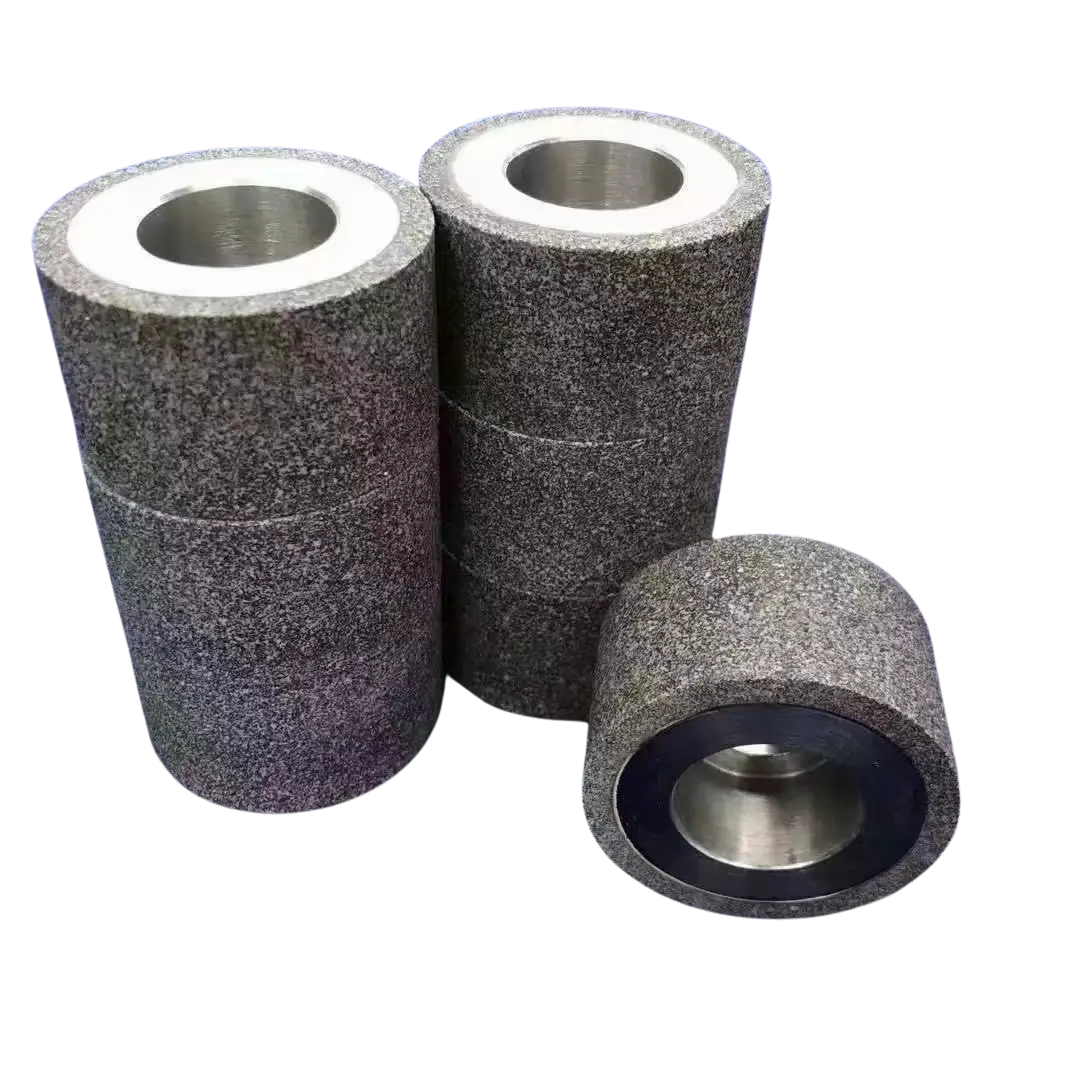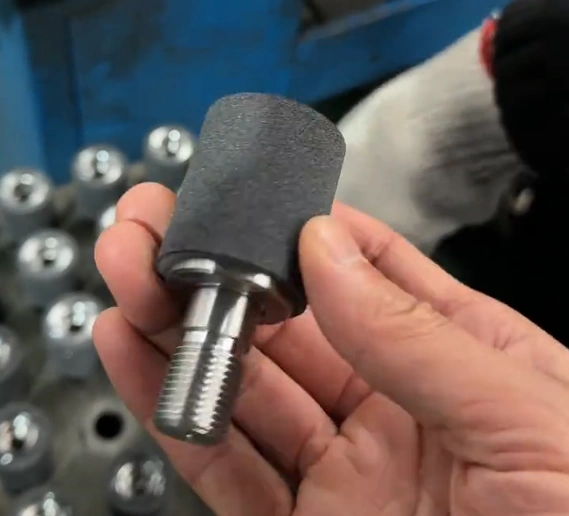
Ceramic CBN Grinding Wheels for Precision ID Grinding of Hardened Steel
If you machine hardened steel, high‑speed steel, or bearing components, you’ve probably faced the same challenges:
- Poor surface finish
- Frequent dressing
- Short grinding wheel life
- Inconsistent bore dimensions
Ceramic bond CBN grinding wheels solve all of these problems.
In this post, I’ll explain:
- What makes ceramic CBN wheels different
- Real customer results (with data)
- How to choose the right wheel for your grinder
- Critical dressing parameters most people get wrong
Let’s get into it.
Why Switch to Ceramic CBN for Internal Steel Grinding?
Ceramic CBN grinding heads are specifically designed for internal bore grinding of steel workpieces, including:
- Hardened steels
- High‑speed steels (HSS)
- Quenched materials like SKD11, 42CrMo
| Parameter | Achievable Value |
|---|---|
| Bore tolerance | ±0.002 mm |
| Surface finish | ≤ Ra 0.1 μm |
| Tool life (vs. alumina) | 10–20× longer |
| Grinding efficiency | 3–5× higher |
And because ceramic‑bond CBN has excellent self‑sharpening properties, you don’t need to dress constantly.
3 Core Advantages of Ceramic CBN Wheels
✅ 1. High rigidity + low thermal expansion
Less tool deflection → more consistent precision, especially on long production runs.
✅ 2. Excellent form retention
The wheel stays true. That means stable bore dimensions over hundreds or thousands of parts.
✅ 3. Self‑sharpening & easy dressing
The ceramic bond is brittle by design. Dull grains fracture and expose fresh, sharp CBN.
You get:
- Longer dressing intervals
- Faster dressing (truing + sharpening in one step)
- Less downtime
Real Customer Results (1,000+ Companies Served)
We’ve helped over 1,000 manufacturers. Here are five real examples.
Before: Alumina wheel, surface finish > Ra 0.6 μm, vibration marks.
After: Ceramic CBN → Ra 0.3 μm, no vibration marks.
Dressing improvement: once per workpiece → once every 200 workpieces.
Continuous grinding: 150 parts between dressings.
Roundness & cylindricity: < 3 μm – customer fully satisfied.
Added pore‑forming agents for better chip evacuation and cooling.
Result: high grinding force, excellent form retention, no surface burns.
Titanium is notoriously sticky and causes wheel loading.
Solution: high‑porosity ceramic CBN, 45 m/s line speed + grinding fluid.
Result: Ra 0.4 μm, stable and efficient grinding.
Before: white alumina / chromium alumina – dressed every part.
After: ceramic CBN – dressed every 80–100 parts.
Scrap rate reduced by 80% – huge gain in competitiveness.
Before You Buy: Is Your Grinder Compatible?
Ceramic CBN is a superabrasive.
Your grinder must run at a minimum line speed of 25 m/s.
Example:
20 mm diameter CBN head → Required spindle speed: ≥ 23,885 RPM.
Check your machine first.
How to Choose the Right Ceramic CBN Wheel
🔹 Abrasive concentration (most people ignore this)
Rule of thumb:
| Stage | Concentration | Why |
|---|---|---|
| Rough grinding | Higher | more grains → higher removal |
| Finish grinding | Lower | fewer scratches → better surface |
General range for ceramic bond: 100–200%
Concentration is not “higher is better.” Match it to your process.
🔹 Feed rate by grit size
| Grit size | Recommended feed rate |
|---|---|
| 100–150# | 0.055 mm/pass |
| 170–240# | 0.035 mm/pass |
| 240#+ | 0.015 mm/pass |
Adjust based on your machine, speed, and workpiece.
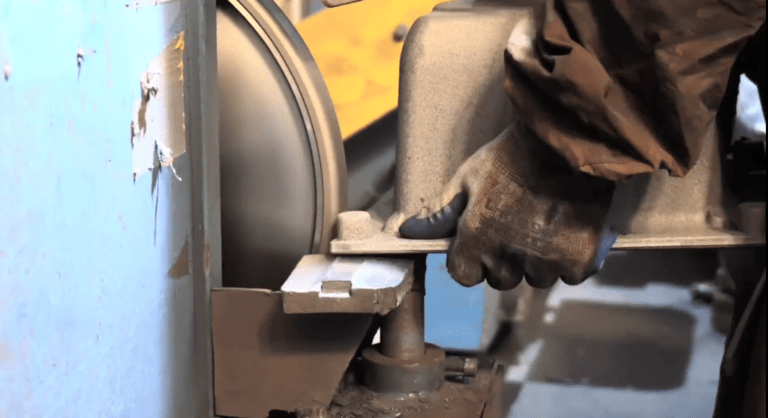
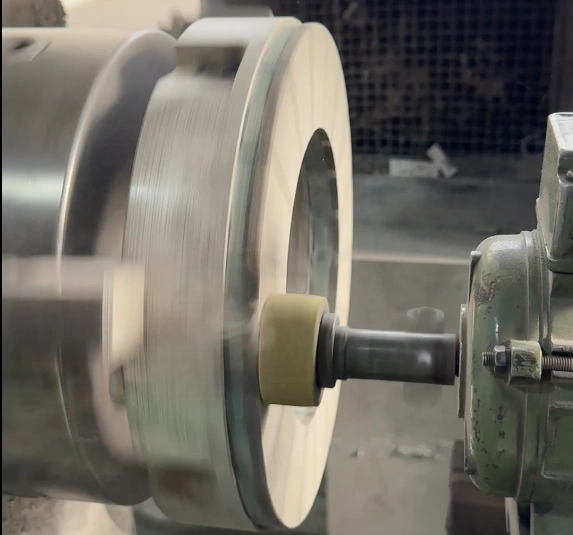
Dressing Ceramic CBN Wheels (the right way)
When to dress
When you see: vibration, slipping, or workpiece burns.
Two common methods:
• Single‑point diamond dresser – use a high‑quality natural diamond
• Diamond roller dresser – preferred for production
Method 1 – Diamond dresser traverse speed (example)
Assume:
Wheel thickness: 50 mm | Grit #80 (≈0.18 mm grain) | Wheel speed: 1,614 RPM
| Speed range | Value |
|---|---|
| Upper limit | 290 mm/min |
| Lower limit | 145 mm/min |
Traverse time per pass:
| Pass time | Value |
|---|---|
| Fastest | ~10.3 sec |
| Slowest | ~20.7 sec |
Use this as a starting point, then adjust.
Method 2 – Diamond dressing roller speed ratio (critical)
Speed ratio = (Diamond roller dresser line speed) ÷ (CBN Wheel line speed)
Recommended starting points:
| Grinding stage | Direction | Speed ratio |
|---|---|---|
| Finish (high Ra requirement) | Counter‑direction | ≈ 0.81 |
| Rough / high stock removal | Same direction | ≈ 0.40 |
Final Thoughts
Ceramic CBN grinding wheels are a major upgrade for internal bore grinding of hardened steels.
But success depends on four things:
✅ Correct concentration
✅ Appropriate feed rate
✅ Proper dressing (especially speed ratio)
We’ve served over 1,000 enterprises and can help you get it right the first time.
Need a solution for your specific steel workpiece?
👉 Contact us – we’ll recommend the right ceramic CBN wheel for your grinder and application.
Get expert support — wheel spec, trial assistance, or dressing optimization
Performance may vary based on machine condition, coolant, and workpiece hardness.